A small roof problem in October can become a ceiling stain by February. Cincinnati winters are hard on shingles, and most of that damage starts with something you could have caught in the fall. Fall is the easiest time to find those problems, and you can spot a lot of them without leaving the yard.
Why fall is the best time for a roof inspection
Cincinnati gets about 23 inches of snow a year and around 45 inches of total rain and snow combined, based on 1991 to 2020 weather records. That's not a lot of snow compared to Cleveland or Buffalo. The bigger problem here is how often it melts and freezes again.
In January, the average high is about 41 degrees and the average low is about 24. So snow on your roof melts in the afternoon, runs into any gap it can find, and then freezes overnight. Ice takes up more room than water does. Every one of those cycles pushes a cracked shingle or a loose piece of flashing open a little wider.
Fall gives you a window. The summer storms are over. The weather is still mild enough for repairs, and shingles seal down better when it's warm out. If you wait until December, a simple fix can turn into a cold-weather job or a wait until spring.
What you can check from the ground
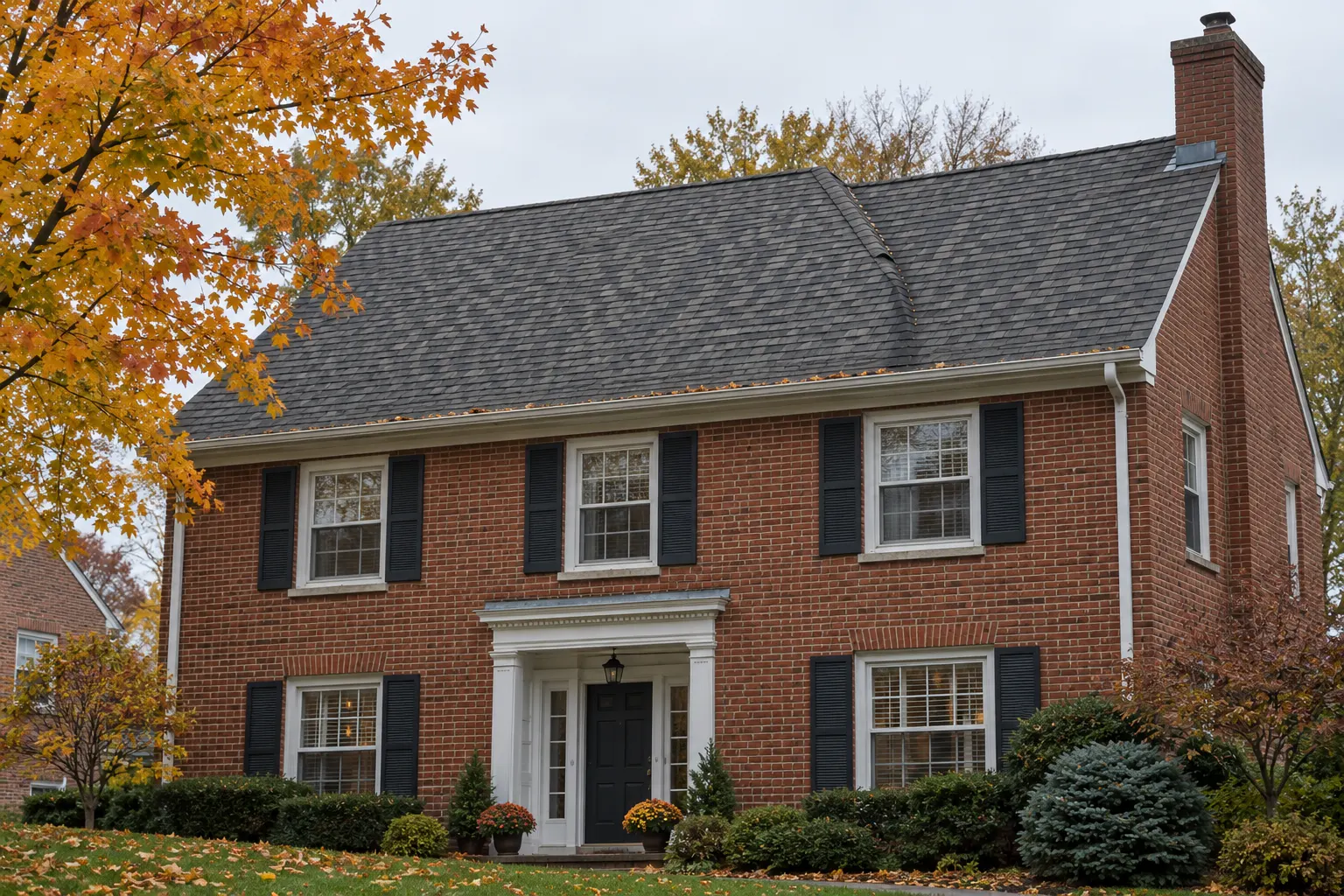
You don't need a ladder for this part. Pick a clear day and walk around the house with binoculars, or zoom in with your phone camera.
- Missing, cracked, or curling shingles. Curled edges mean the shingles are drying out.
- Dark streaks or bare spots where the shingle granules have worn off.
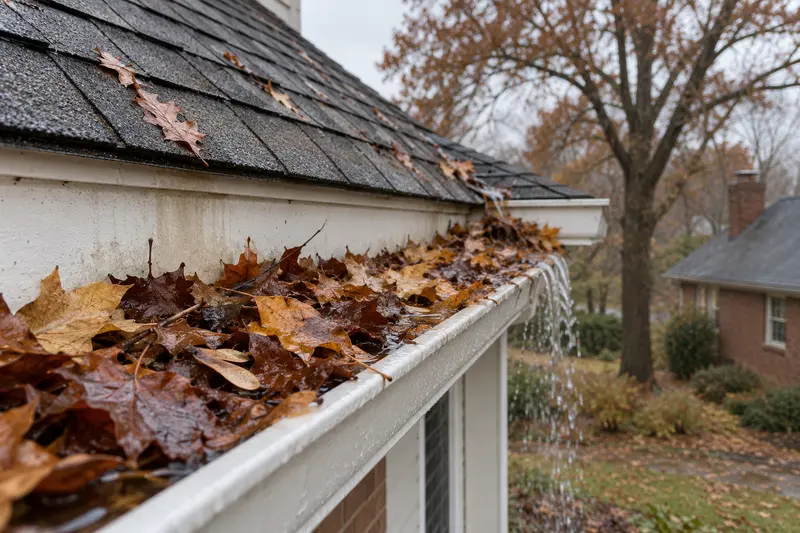
- Granules in the gutters or at the bottom of the downspouts. They look like coarse black sand. A lot of them on an older roof means it's wearing out.
- Rusty, bent, or lifted flashing around the chimney, vents, and skylights.
- Gutters that sag or pull away from the boards behind them.
- A roof line that dips. If the ridge doesn't look straight, the wood underneath may be soft.
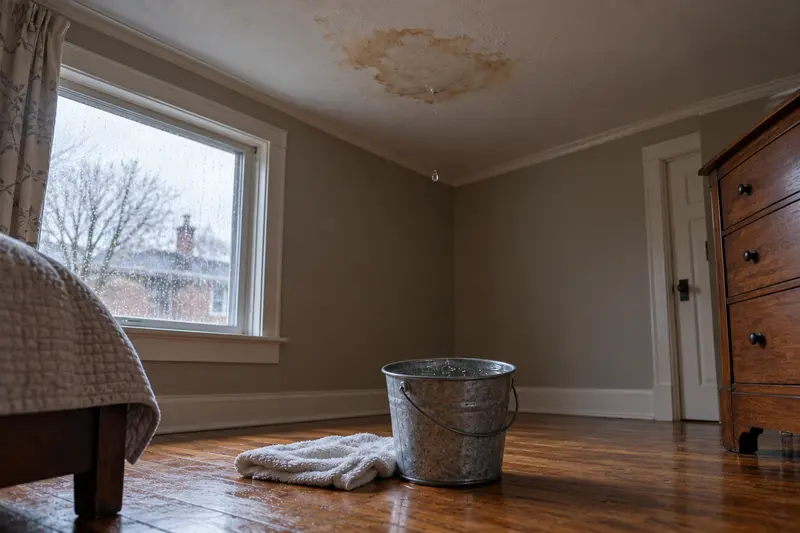
Then head inside. If you can get into the attic safely, take a flashlight and look at the underside of the roof. Water stains, damp insulation, or daylight coming through are all signs of a problem. On the top floor, check the ceilings for brown rings, especially near the chimney and bathroom vents.
Stay off the roof itself. Wet leaves and morning frost make shingles slick this time of year, and a fall from a one-story roof can still put you in the hospital. Looking from the ground is enough to know whether you need a closer look.
What a professional roof inspection covers
A roofer can spot things you can't see from the driveway. When our crew does an inspection, we check:
- Every slope of shingles up close, including hail bruises and lifted tabs that look fine from the street
- Flashing where the roof meets the chimney, walls, vents, and skylights
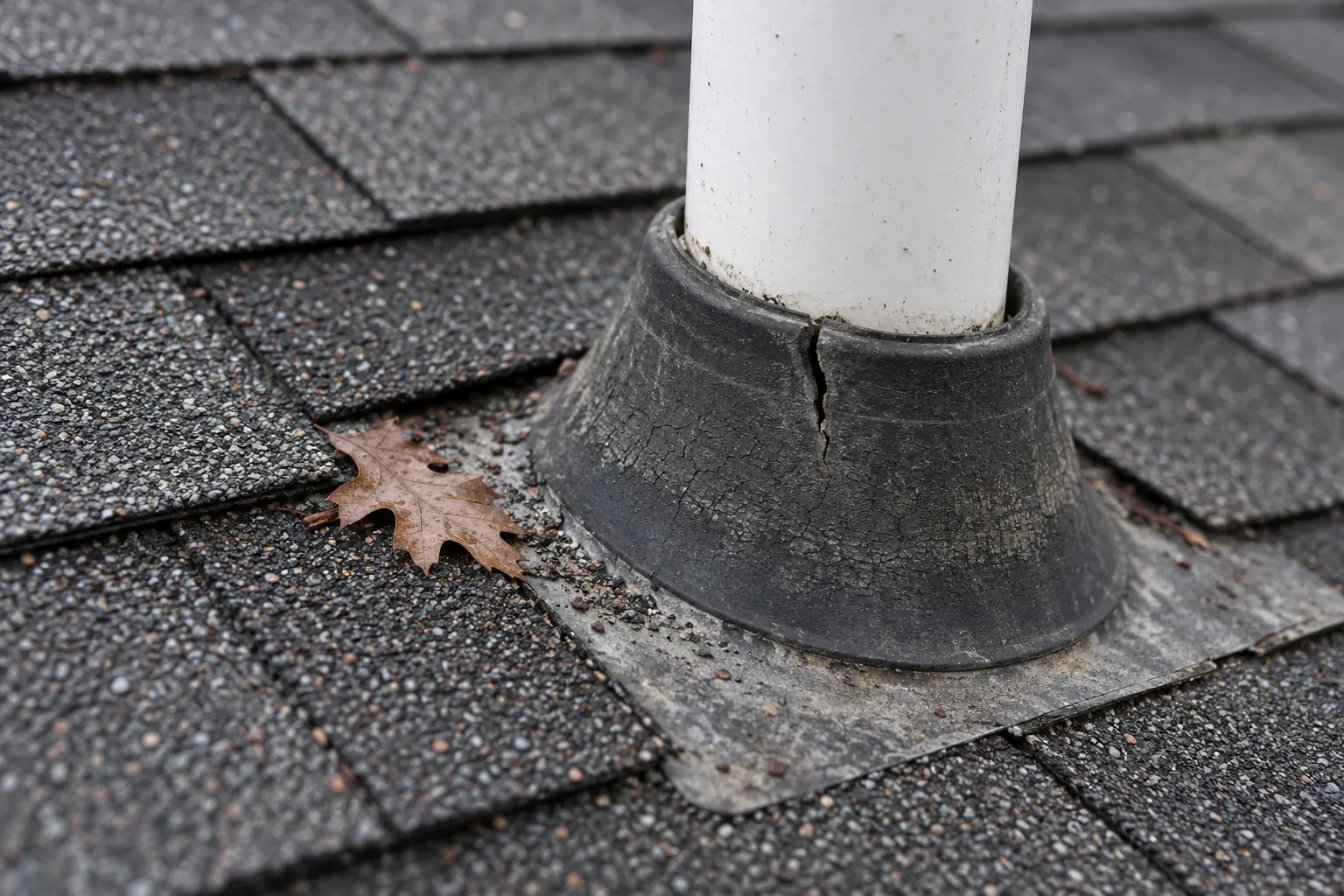
- Pipe boots, the rubber collars around plumbing vents. The sun cracks them over time, and they're one of the most common leak spots on any roof.
- Ridge caps and exposed nail heads
- Soft spots in the wood decking
- Attic ventilation and signs of moisture underneath
- Gutters, downspouts, and the fascia boards they hang on
You get photos of everything we find. If a repair will do the job, that's what we'll recommend. You can see what our roof repair service covers before we come out.
What we look for in different parts of the Cincinnati area
Roofs around here don't all fail the same way. The age of the house and the trees around it make a big difference.
Older homes in Covington, Newport, Norwood, and Cincinnati's older neighborhoods often have steep roofs, brick chimneys, and valleys where two roof slopes meet. On houses that have been around for 100 years or more, the flashing has usually been patched more than once. Chimney flashing is the first place we check on these homes.
In West Chester, Mason, and Fairfield, a lot of subdivisions went up in the 1990s and 2000s. Many of those houses still have their first roof. A 20 to 30 year old asphalt roof is right in the range where shingles start losing granules and curling at the edges.
Florence and the rest of Boone County see strong spring storms with hail and straight-line winds. Hail can bruise a shingle without breaking it, so the roof looks fine from the yard. Those soft spots can start leaking months later, once the fall rains show up. If your area got hit this year, our storm damage inspection is free.
Homes with big trees nearby, which covers plenty of streets in Colerain Township, Forest Park, Blue Ash, Hamilton, Middletown, and Lebanon, have their own issues. Branches rub the shingles. Leaves pack into valleys and gutters. Moss grows on shady north-facing slopes and holds water against the roof. Trimming branches back and clearing valleys before winter goes a long way.
Should you repair or replace?
Most asphalt shingle roofs last about 20 to 30 years. The exact number depends on the shingle and how well the attic is vented. Age alone doesn't mean you need a new roof, though.
A repair usually makes sense when the damage is in one spot, the rest of the shingles are in good shape, and the wood underneath is solid. A replacement starts to make more sense when you see granule loss across the whole roof, more than one leak, soft decking, or shingles curling on every side of the house.
If the inspection shows you need a new roof, a fall roof replacement is usually done in one day, two for bigger homes. Every job comes with our 5-year labor warranty. You can also add a 10 to 20 year GAF product warranty on qualifying materials.
Common questions
Our roof inspections are free, with photos and no obligation. Some companies charge for an inspection, so ask before anyone comes out.
Once a year is a good habit, plus after any big hail or wind storm. Fall is the best time for the yearly check because you can fix problems before freeze-thaw season starts.
For a typical home, plan on about an hour. A bigger house or a roof with a lot of damage can take a bit longer.
Yes. If we find storm damage, our photos and written report are the kind of proof an adjuster wants to see. We can also meet your adjuster at the house.
Many repairs can be done in winter, and active leaks get fixed whenever they happen. Shingles need some warmth to seal down well, though, so fall is easier than January for most work.
Schedule your fall roof inspection
Gendir Roofing is a family business. Five brothers work as one crew, with no subcontractors, so the person who quotes your job is the person on your roof. We're GAF-certified, licensed and insured in Ohio and Kentucky, and accredited by the BBB with an A+ rating.
Call us at (513) 849-3952 to book a free roof inspection. We're available Monday through Saturday, 7 a.m. to 7 p.m., and we can often get to you as soon as next week.