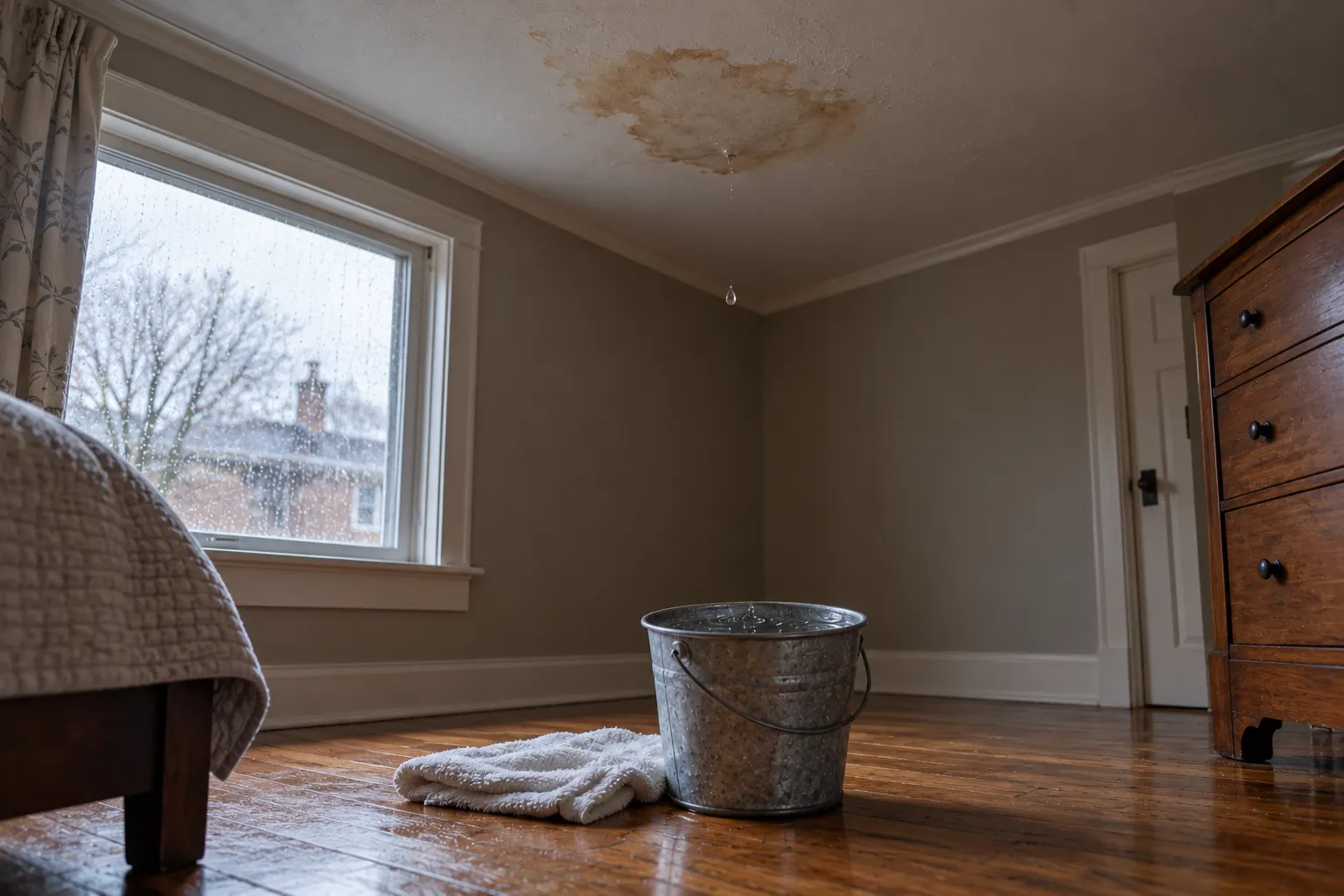
A brown spot on the ceiling after a hard rain is easy to ignore. Please don't. Water rarely shows up right where it gets in. By the time you see a stain, the wood and insulation above it have usually been wet for a while. Start with the steps below, then figure out where the water is coming from and whether you need roof leak repair.
What to do right now
If water is coming in, start inside the house:
- Put a bucket or towels under the drip, and move furniture and electronics out of the way.
- If water is near a light fixture or ceiling fan, turn off the breaker for that room.
- If the ceiling is bulging with water, poke a small hole at the lowest point with a screwdriver and let it drain into a bucket. This keeps the water from spreading across the drywall.
- Take photos of the stain, the drip, and any damaged items. Your insurance company may ask for them.
- Stay off the roof. Wet or icy shingles are slick, and a leak is never worth a fall.
Then call a roofer. We offer same-day response for active leaks. If needed, we'll put an emergency tarp over the problem area to keep water out until the permanent repair is done.
Why the leak isn't where the stain is
Water that gets under your shingles doesn't drop straight down. It runs along the roof deck, follows rafters, and soaks across insulation until it finds a low spot. That's why a leak from a chimney can show up as a stain in the middle of a bedroom ceiling several feet away.
If you can get into the attic safely, go up with a flashlight during or right after a rain. Look for wet wood, dark streaks on the rafters, or damp insulation. Follow the water trail uphill. That's usually where the real problem is.
The most common places roofs leak
Most leaks we find come from a short list of spots. You can't fix any of them from the ground, but knowing them helps you describe the problem when you call.
Pipe boots
These are the rubber collars around the plumbing vent pipes sticking out of your roof. The sun dries the rubber until it cracks, and then rain runs right down the pipe. A cracked pipe boot is one of the most common leaks we repair, and it's a small fix.
Chimney flashing
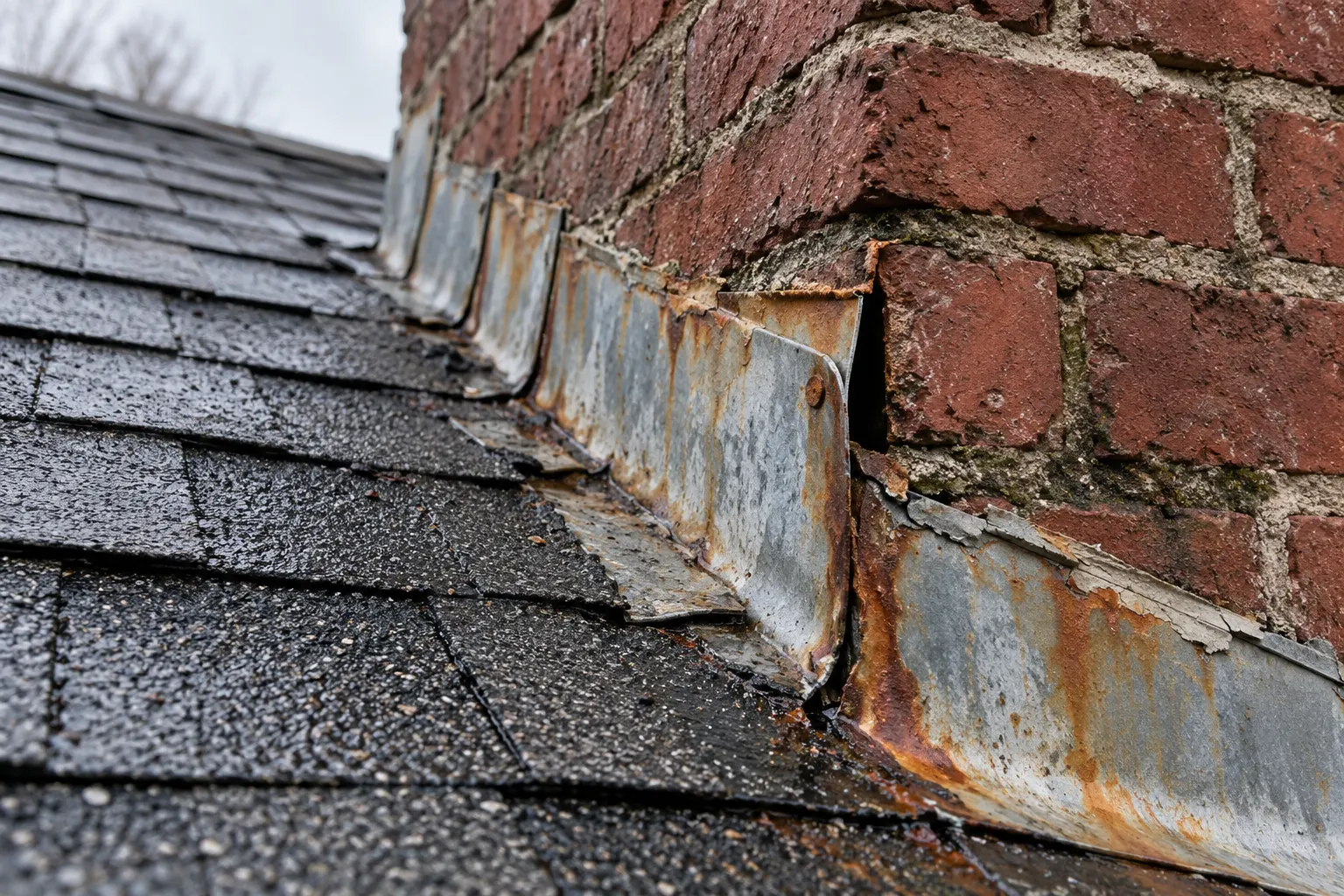
Flashing is the metal that seals the joint where the roof meets the chimney. When it rusts, pulls loose, or the caulk behind it dries out, water gets in. This is a big one on older brick chimneys, which you'll see on a lot of homes in Covington, Newport, Norwood, and older Cincinnati neighborhoods.
Valleys
A valley is where two roof slopes meet and form a channel. Every drop of water from both sides runs through it. On homes with big trees nearby, which describes a lot of Colerain Township and Forest Park, leaves pile up in valleys, hold moisture, and wear the shingles down faster than anywhere else on the roof.
Vents and skylights
Bathroom vents, attic vents, and skylights all cut a hole in your roof. Each one depends on a seal or flashing to stay dry. When the seal fails, water follows the opening right into the house.
Storm-damaged shingles
Hail can bruise a shingle without breaking it, and wind can lift shingles just enough to break their seal. That damage often doesn't leak right away. Months later, once the steady fall rains start, the water finds its way in. Spring storms with hail and straight-line winds are common across the area, from Florence and Boone County up through Fairfield, Hamilton, and Middletown.
Gutters backing up
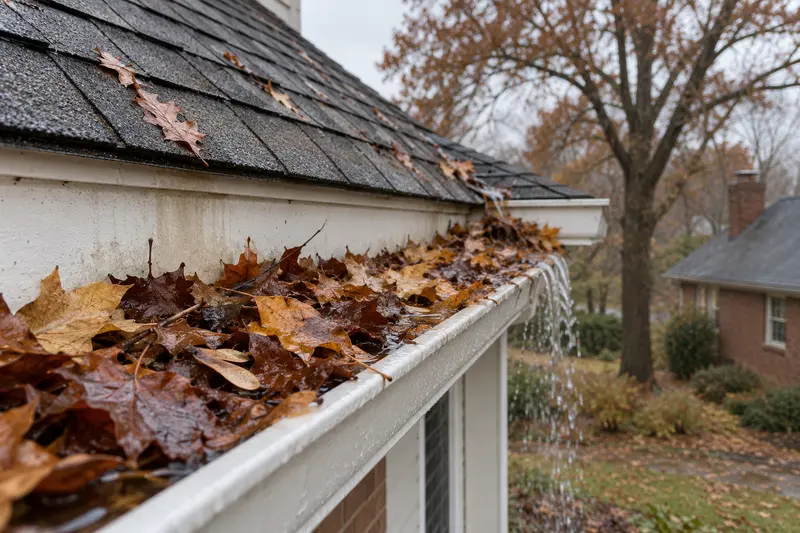
Sometimes a "roof leak" isn't the roof at all. When gutters clog, water can back up behind them and soak the edge of the roof and the wall below. If your stain is near an outside wall, check the gutters first. Our gutter guards page explains how guards help keep that from happening.
Why a small leak gets worse in winter
A November leak doesn't usually stay small. In January, Cincinnati's average high is about 41 degrees and the average low is about 24. That means water gets into a gap during the day, freezes overnight, and expands. Every cycle makes the gap a little bigger.
Snow adds another problem. When heat from the attic melts snow on the roof, the water runs down to the cold edge and freezes again. That ridge of ice is called an ice dam. Water backs up behind it and gets pushed under the shingles. Any house with a warm attic can get them, whether it's an older home in Blue Ash or a newer two-story in West Chester, Mason, or Lebanon.
Better attic insulation and ventilation are the long-term fix for ice dams. When we do a full roof replacement, we also install ice-and-water shield, a sticky waterproof layer under the shingles along the edges and valleys where ice dams form.
Repair or replace?
One leak on a roof that's otherwise in good shape is a repair. Most of the time that means a new pipe boot, a flashing fix, or replacing a few shingles.
A replacement makes more sense when there are several leaks at once, the wood decking is soft, or the shingles are losing granules all over the roof. Most asphalt roofs last around 20 to 30 years, so age matters too. We'll show you photos of what we find either way. If a repair will do the job, that's what we'll recommend. Our roof repair service covers leaks, flashing, pipe boots, and missing shingles.
Will insurance pay for a roof leak?
It depends on why the roof is leaking. Many homeowner's policies cover sudden damage, like a tree limb falling on the roof or shingles torn off in a storm. Most don't cover leaks caused by an old roof wearing out. Every policy is different, so read yours or call your agent before you file.
If the leak came from storm damage, we'll document it with photos and a written report and meet your adjuster at the house. Our storm damage page walks through how we help with claims.
Common questions
It depends on what's causing the leak. Replacing a pipe boot is a small job, while flashing around a chimney or damage across a whole slope takes more work. Our inspections are free, and you get a written estimate before any work starts.
We can put an emergency tarp on to stop water from coming in. The permanent repair needs a dry roof, so it happens once the weather clears.
As soon as you can. The EPA recommends drying wet building materials within 24 to 48 hours to prevent mold. A leak that drips for weeks can also rot the roof deck and ruin insulation.
A tarp or a dab of roofing sealant can buy you a little time, but it isn't a real fix, and it means getting on the roof. If the shingles are wet, icy, or steep, leave it to a crew with the right safety gear.
If water is actively dripping inside, a ceiling is sagging, or water is near anything electrical, treat it as an emergency and call right away.
Get your roof leak fixed
Gendir Roofing is a family business. Five brothers work as one crew, with no subcontractors. We're GAF-certified, licensed and insured in Ohio and Kentucky, and every repair comes with our 5-year labor warranty.
If your roof is leaking, call (513) 849-3952. We're available Monday through Saturday, 7 a.m. to 7 p.m., and we keep room in the schedule for leaks and emergencies.